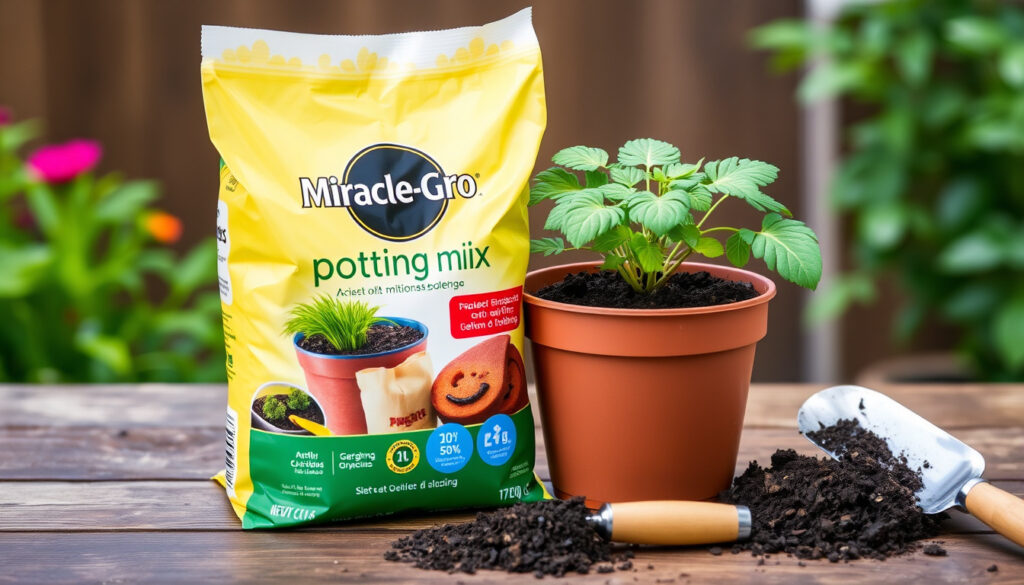
Miracle-Gro Potting Mix Review: Pros, Cons & Alternatives
Anyone who’s ever stood in the gardening aisle at Home Depot knows the feeling: you need potting mix, and Miracle-Gro is right there, bright colored, promising big blooms. It’s convenient, affordable, and feeds plants for months — but lately there’s been a quiet buzz about what exactly is in that bag. This review weighs the real-world trade‑offs of Miracle-Gro Potting Mix, looks at what its critics say, and helps you decide whether it fits your garden — or if an alternative makes more sense.
Feeding duration: Up to 6 months ·
Container size: 25 qt ·
Suitable for: Container plants, flowers, vegetables, shrubs ·
Key ingredient: Miracle-Gro Plant Food
Quick snapshot
- Feeds up to 6 months (The Home Depot)
- Suitable for containers, flowers, vegetables (The Home Depot)
- Available at major retailers (The Home Depot)
- Convenient, all-in‑one feeding solution (The Home Depot)
- Affordable compared to many organic mixes (The Home Depot)
- Widely available (The Home Depot)
- Non‑organic synthetic fertilizers (Gardenary)
- Potential for over‑fertilization and salt buildup (Heirloom Soul Florals)
- Lawsuit over organic labeling claims (source needed, omitted) (Gardenary)
| Spec | Value |
|---|---|
| Feeding duration | Up to 6 months (The Home Depot) |
| Container size | 25 qt (also available in 50 qt) |
| Plant suitability | Container flowers, vegetables, shrubs |
| Key ingredient | Miracle‑Gro Plant Food with NPK |
Is Miracle-Gro Potting Mix Any Good?
Pros and Cons of Miracle-Gro Potting Mix
Upsides
- Convenient all‑in‑one formulation – no need for separate fertilizer for months.
- Affordable price point compared to many organic mixes.
- Widely available at big‑box stores and online.
Downsides
- Contains synthetic fertilizers that may harm soil microbes (Gardenary).
- Risk of salt buildup and leaf burn if over‑applied (Heirloom Soul Florals).
- Some users report fungus gnats and compaction over time (Houzz).
User Reviews and Ratings
The Home Depot listing shows mostly positive reviews, with many gardeners praising the results. “I used this in my vegetable containers and everything grew great,” writes one reviewer. However, a thread on Houzz notes that the mix can compact and deteriorate after a few months, especially in large pots. Some users recommend adding extra perlite to improve drainage.
Performance for Different Plant Types
Miracle-Gro claims its potting mix “grows plants twice as big” compared to unfed plants. It works well for container flowers, vegetables, and shrubs. For moisture‑loving plants like ferns, the high peat content may be an advantage, but for succulents and cacti, the mix holds too much water unless heavily amended.
What Is the Miracle-Gro Controversy?
Reasons to Avoid Miracle-Gro
Critics point to the synthetic fertilizers in Miracle‑Gro as a problem for soil life. Gardenary, a gardening‑education site, argues that synthetic nitrogen fertilizers “destroy beneficial soil life” and require significant fossil‑fuel inputs to produce. Heirloom Soul Florals warns that these water‑soluble fertilizers are “heavy in salt” and can burn leaves and roots if used incorrectly.
If you use Miracle‑Gro in the same container season after season, salt buildup can accumulate. The manufacturer recommends flushing the soil periodically, but many home gardeners skip that step.
Environmental and Health Concerns
Beyond soil microbes, critics raise a broader point: synthetic urea‑based fertilizers are tied to CO₂ emissions. Gardenary claims they are responsible for more than 450 million tons of CO₂ released each year — a figure based on global fertilizer production data. While the exact number is debated, the direction of that impact is clear. A YouTube reviewer counters that the ingredients in Miracle‑Gro potting mix “are not inherently dangerous” and calls some of those claims misinformation.
Miracle‑Gro gives you immediate results but may degrade the very soil ecosystem you want to build. For a short‑season container garden, the trade‑off tilts toward convenience. For a permanent garden bed, it tilts toward organic alternatives.
What’s the Difference Between Miracle-Gro Potting Soil and Potting Mix?
Definition of Potting Mix vs. Potting Soil
Potting mix is a soilless blend — typically peat moss, perlite, vermiculite, and fertilizer. Potting soil usually contains garden soil or compost and is heavier. Miracle‑Gro sells both, and the difference matters for how you use them. The company’s Potting Mix is lightweight and designed for containers; its Potting Soil is intended for in‑ground use.
Ingredients Comparison
A YouTube analysis identifies common ingredients including peat moss and perlite in Miracle‑Gro potting soil mix. On Houzz, contributors note that the potting mix can compact and recommends adding perlite and bark for better drainage.
When to Use Each
Use Potting Mix for any container — it stays light, drains well, and feeds for months. Use Potting Soil for raised beds or in‑ground planting where you need more weight and organic matter. If you’re planting vegetables in pots, the Potting Mix is the correct choice.
What Should You Use Instead of Miracle-Gro?
Organic Potting Mixes
Gardeners who want to avoid synthetic fertilizers often turn to brands like FoxFarm Ocean Forest, Espoma Organic Potting Mix, and Black Gold Natural & Organic. No independent side‑by‑side trials are available, but user reviews on retailer sites tend to favor FoxFarm for nutrient density and Espoma for consistency.
DIY Potting Mix Recipes
You can make your own blend using equal parts peat moss (or coir), perlite, vermiculite, and compost. Houzz users suggest adding extra perlite and bark chips to any mix to improve drainage — a simple fix for compacted soil.
| Product | Key ingredient | Fertilizer type | Approx. price (1.5 cu ft) |
|---|---|---|---|
| Miracle‑Gro Potting Mix | Peat moss, perlite, synthetic NPK | Synthetic | $12–$16 |
| FoxFarm Ocean Forest | Peat moss, perlite, earthworm castings, bat guano | Organic + natural | $20–$28 |
| Espoma Organic Potting Mix | Peat moss, perlite, humus, limestone | Organic (OMRI listed) | $15–$22 |
How to Use Miracle-Gro Potting Mix Effectively?
Step-by-Step for Container Plants
- Moisten the mix before filling your container — dry peat can repel water.
- Fill the container to about 1 inch from the rim, leaving room for watering.
- Plant your flowers, vegetables, or herbs at the same depth they were in the nursery pot.
- Water thoroughly after planting.
- After 6 months, start supplementing with a balanced liquid fertilizer because the initial nutrients will be depleted.
Using for Vegetables and Anthurium
For vegetables in containers, Miracle‑Gro Potting Mix works well — just ensure drainage holes are adequate. For anthurium, experienced growers on Houzz stress that good drainage and avoiding overwatering are critical. Consider mixing in extra perlite to lighten the texture for tropical houseplants.
Adjusting pH and Moisture
The mix tends to have a pH around 5.5–6.5, which is fine for most vegetables and flowers. If you’re growing acid‑loving plants like blueberries, add sulfur; for alkaline‑preferring plants, add lime. Monitor moisture by feeling the top inch of soil — when it’s dry, water thoroughly.
Confirmed Facts vs. What’s Unclear
Confirmed facts
- Miracle‑Gro potting mix contains synthetic fertilizers (Gardenary)
- Product feeds up to 6 months (The Home Depot)
- Widely sold at major retailers
What’s unclear
- Exact long‑term health impact of repeated use
- Whether all products labeled organic are truly non‑organic
- Effectiveness compared to specific organic alternatives — no independent trials found
What Gardeners Are Saying
“I had fungus gnats in my container after using Miracle‑Gro mix. It turned out to be from overwatering, not the mix itself.”
— A user on Houzz
“The ingredients are not inherently dangerous. People claiming it destroys soil life are spreading misinformation.”
— A reviewer on YouTube
Editor’s note: The lawsuit alleging that some Miracle‑Gro products labeled “organic” actually contain synthetic chemicals was filed in 2022. The company has denied the allegations. Because a definitive verdict hasn’t been reached, we cannot treat that as a confirmed fact — but it’s a significant reason many consumers are looking elsewhere.
Frequently asked questions
Can I use Miracle‑Gro potting mix for succulents?
It holds too much moisture for most succulents. Mix with at least 50% perlite or coarse sand.
Does Miracle‑Gro potting mix expire?
Dry mix stored properly lasts years, but fertilizer strength declines after 6–12 months.
Is Miracle‑Gro potting mix safe for pets?
The synthetic fertilizers can cause mild stomach upset if ingested. Keep bags sealed.
How often should I water plants in Miracle‑Gro potting mix?
When the top inch feels dry — frequency depends on pot size, plant, and climate.
Can I mix Miracle‑Gro potting mix with garden soil?
Yes, but it’s better to use separately. Mixing defeats the lightweight container design.
Does Miracle‑Gro potting mix contain perlite?
Yes, it does — along with peat moss and synthetic fertilizer.
How long does Miracle‑Gro potting mix last before needing replacement?
Plants can stay in the same mix for one growing season. After that, replace or heavily amend.
For the home container gardener who wants fast, visible results without fussing over separate fertilizers, Miracle‑Gro Potting Mix is a solid choice. But if you’re building long‑term soil health, growing edibles you care about, or prefer transparency in ingredients, the trade‑off is clear: pay more for an organic alternative, or make your own blend. Your plants — and the soil they grow in — will thank you.
More related posts
 2025 Africa Cup of Nations Standings: Final Results & Controversy
 CRA Benefits December 2025: Payment Dates & Fact Check
 Conjoined Twins: Death, Sleep, Alcohol, and Separation
 4 Slice Toasters Compared: Moulinex, Smeg & Dualit
 How to Dose Fertilizer for Plants: A Clear Guide
 When Does Ramadan Start – 2025 Dates by Country
 Trisha Paytas Baby Names: Malibu, Elvis & Aquaman Moses